Home || Our service || Egg Retrieval & Emryo Transfer
Egg Retrieval & Embryo Transfer: A Step-by-Step Guide to the IVF Process
For couples experiencing difficulty conceiving, In Vitro Fertilization (IVF) can provide an important pathway toward pregnancy. Two of the key stages of IVF are egg retrieval and embryo transfer. At Vatsalyam Clinic, Dr. Archana Bharti focuses on providing personalized fertility care and helping patients understand each step of their treatment journey.
What Is Egg Retrieval?
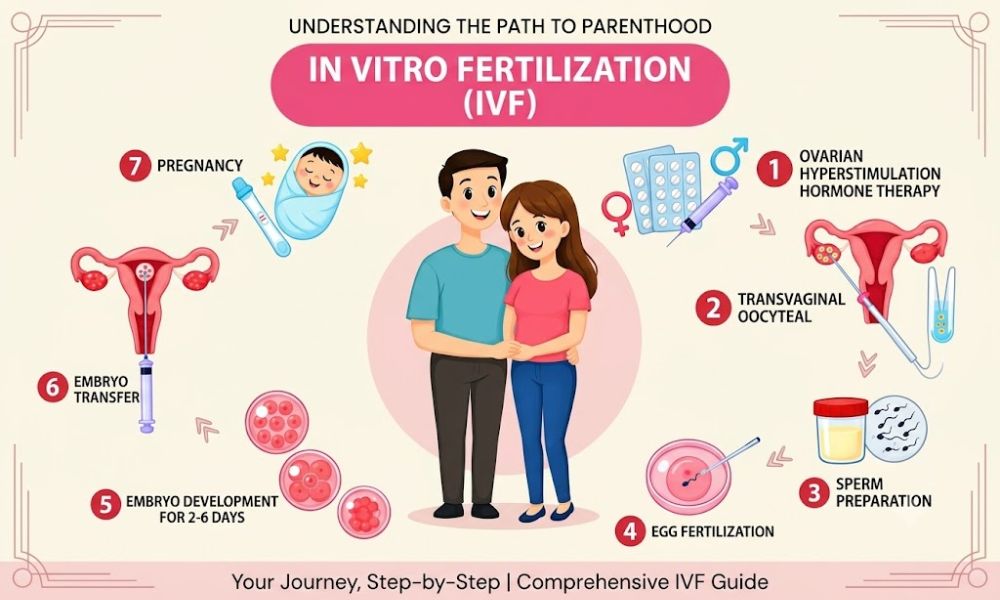
Egg retrieval, also known as oocyte retrieval, is a procedure used to collect mature eggs from the ovaries during an IVF treatment cycle. Before the procedure, fertility medications are generally prescribed to stimulate the ovaries so that multiple eggs can develop.
During this stage, the growth of ovarian follicles is monitored through ultrasound examinations and, when appropriate, blood tests. Once the follicles are considered ready, a final medication called a trigger is given to help the eggs complete their maturation.
The egg retrieval procedure is usually performed using ultrasound guidance. A thin needle is carefully passed through the vaginal wall toward the ovaries to collect fluid containing the eggs from the developing follicles. The collected eggs are then assessed in the laboratory.
The procedure itself is generally completed within a relatively short period, although the exact duration can vary from person to person. Your fertility specialist will explain the preparation, procedure and recovery process according to your individual treatment plan.
What Happens After Egg Retrieval?
After retrieval, the eggs are evaluated in the embryology laboratory. If suitable sperm is available, fertilization may be attempted using conventional IVF or Intracytoplasmic Sperm Injection (ICSI), depending on the treatment plan.
Following fertilization, the resulting embryos are monitored as they develop. Not every egg will fertilize, and not every fertilized egg will continue developing into an embryo suitable for transfer. Your fertility team will guide you through the laboratory results and discuss the next steps.
What Is Embryo Transfer?
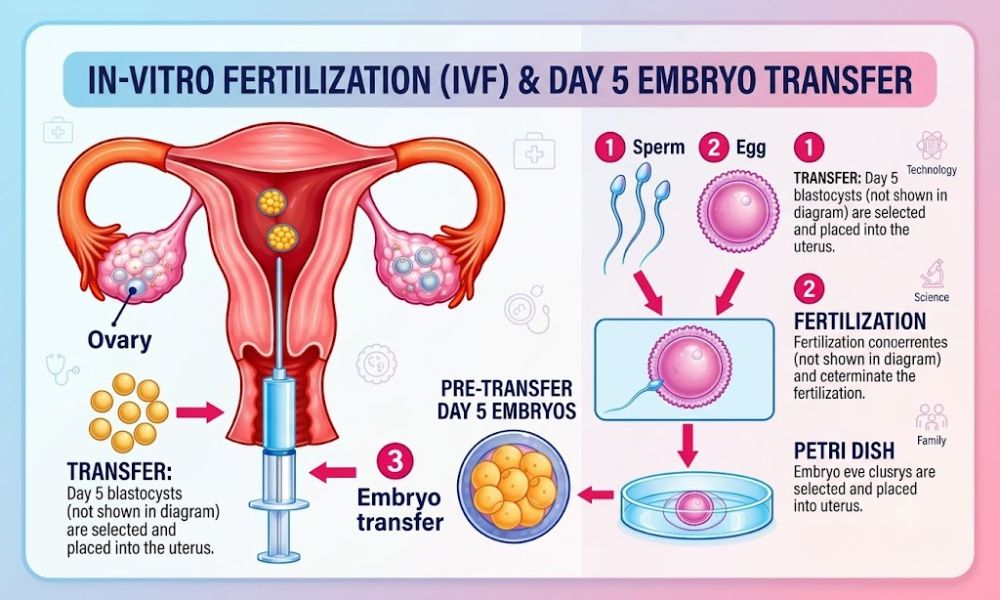
Embryo transfer is the stage of IVF in which an embryo is placed into the uterus with the aim of achieving implantation and pregnancy.
The procedure is generally performed using a thin, flexible catheter. The catheter is gently guided through the cervix into the uterus, where the selected embryo is placed. In many cases, embryo transfer does not require anesthesia, although individual circumstances may differ.
Depending on the treatment plan, an embryo may be transferred in the same cycle or after embryos have been frozen and stored for later use. The timing of transfer is decided based on factors such as embryo development, the condition of the uterine lining and the overall treatment plan.
What Happens After Embryo Transfer?
After embryo transfer, patients usually continue prescribed medications and follow their fertility specialist’s instructions. Implantation, if it occurs, takes place after the embryo transfer, and pregnancy cannot be confirmed immediately.
A pregnancy blood test (beta-hCG) is generally performed after an appropriate interval recommended by the fertility team. Taking a pregnancy test too early may provide misleading results.
It is also important to remember that IVF outcomes can vary between individuals. Factors such as age, ovarian reserve, egg and sperm factors, embryo development and underlying fertility conditions can influence treatment outcomes.
Personalized Fertility Care at Vatsalyam Clinic
Egg retrieval and embryo transfer are important parts of IVF, but fertility treatment is not the same for every patient. At Vatsalyam Clinic, Dr. Archana Bharti provides individualized guidance based on each patient’s reproductive health, medical history and fertility goals.
Understanding the IVF process can make treatment feel more manageable. If you are considering IVF or have questions about egg retrieval, embryo transfer or fertility treatment, a consultation can help you understand the available options and what may be appropriate for your situation.
FAQ'S
Egg retrieval is performed under appropriate medical supervision, and pain management or anesthesia may be used according to the procedure and clinic protocol. Some patients may experience mild cramping or discomfort afterward.
The transfer itself is usually a short procedure, although preparation and monitoring may take additional time.
Your fertility specialist will advise you when to take the pregnancy test, usually using a blood test after an appropriate waiting period.
IVF may be recommended for different fertility conditions, but treatment suitability depends on individual medical circumstances. A fertility consultation is important before deciding on treatment.
The number of eggs collected varies from person to person. It depends on factors such as age, ovarian reserve, response to fertility medicines, and the individual IVF treatment plan. The goal is to obtain mature eggs while maintaining patient safety.
Embryologists assess embryos as they develop in the laboratory. Selection for transfer is based on the embryo's development and other clinical and laboratory considerations. Your fertility specialist will explain the factors considered in your individual treatment.
After embryo transfer, follow the medication and activity instructions provided by your fertility specialist. Normal daily activities may often be continued, but recommendations can vary depending on the individual case. Contact your fertility clinic if you experience concerning symptoms or have questions during the waiting period.