Home || Our service || Unexplained Infertility
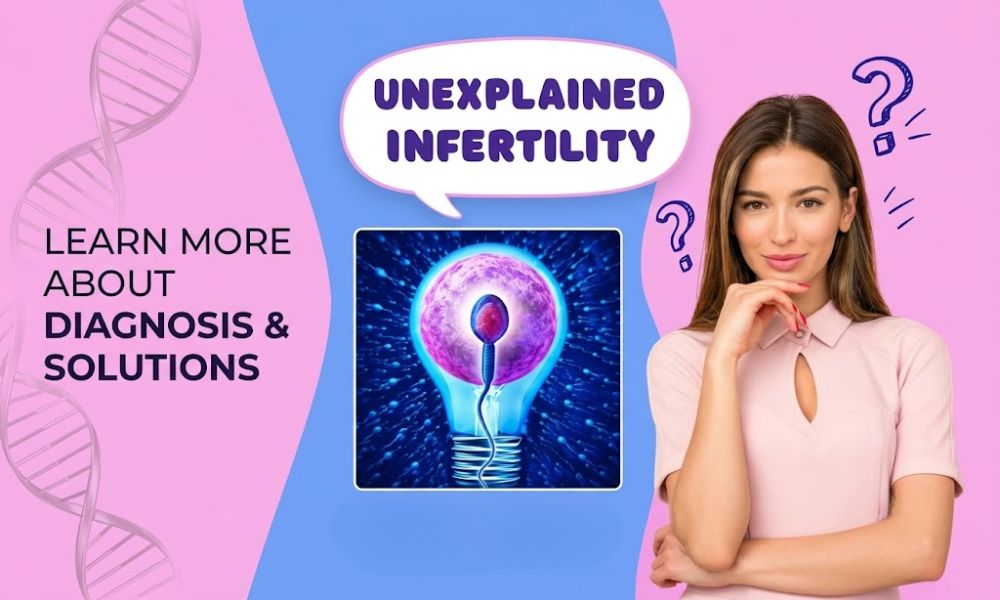
Unexplained Infertility: Causes, Evaluation & Treatment
Unexplained infertility is a situation where a couple has difficulty achieving pregnancy even though the initial fertility evaluation does not identify a clear cause. Standard evaluation may show that ovulation is occurring, the reproductive tract appears suitable for conception, and semen analysis does not reveal a significant abnormality. Even when routine tests are normal, several factors that are difficult to measure may still influence the chances of conception.
At Vatsalyam Clinic, unexplained infertility is evaluated with an individualized approach. Dr. Archana Bharti reviews the couple’s medical and reproductive history, menstrual and ovulation patterns, previous fertility investigations, tubal assessment and male fertility results. Based on the available findings, appropriate treatment options can be discussed according to age, duration of infertility and individual reproductive circumstances.
Unexplained infertility does not mean that pregnancy is impossible. It means that a specific cause has not been identified through the standard evaluation. Further management may involve continued attempts to conceive, fertility medicines with intrauterine insemination (IUI), or IVF depending on the individual situation and previous treatment history.
Evaluation & Treatment for Unexplained Infertility
When pregnancy has not occurred despite regular attempts and routine fertility investigations do not identify a clear cause, a systematic evaluation can help confirm that the commonly assessed fertility factors have been appropriately reviewed. This may include assessment of ovulation, fallopian tube patency, the uterus and reproductive anatomy, ovarian factors and semen analysis.
Treatment for unexplained infertility depends on factors such as the woman’s age, duration of infertility, previous treatment and individual fertility findings. For some couples, treatment may involve ovarian stimulation with oral medication combined with IUI. For others, particularly depending on age or previous treatment outcomes, IVF may be considered. The choice of treatment should be individualized after discussing the potential benefits, limitations and risks.
Factors That May Be Associated With Unexplained Infertility
- Subtle ovulation or reproductive factors
- Age-related changes affecting fertility
- Changes in egg quality that may not be identified by routine tests
- Subtle sperm function or fertilization factors
- Tubal or pelvic factors not detected by initial evaluation
- Endometriosis or other reproductive conditions
- Uterine or endometrial factors
- Factors that cannot be identified through routine fertility testing
What Does an Unexplained Infertility Evaluation Include?
At Vatsalyam Clinic, evaluation may involve several components depending on the couple’s medical history, duration of infertility, previous investigations and clinical findings.
| Evaluation Area | What May Be Assessed |
|---|---|
| Medical History | Previous illnesses, surgeries, medications and reproductive history |
| Menstrual History | Cycle length, regularity, bleeding pattern and symptoms |
| Ovulation Assessment | Menstrual pattern and tests related to ovulation when clinically appropriate |
| Ovarian Assessment | Ovarian reserve and other relevant reproductive factors |
| Uterine Assessment | Structure of the uterus and possible abnormalities |
| Tubal Assessment | Whether the fallopian tubes appear open when indicated |
| Endometrial Assessment | Endometrial development and relevant uterine factors |
| Male Fertility | Semen volume, sperm concentration, movement and morphology |
| Previous Fertility Treatment | Response to previous medicines, IUI or other fertility treatment |
| Lifestyle & Medical Factors | Weight, smoking, alcohol, medications and other relevant factors |
Not every patient requires every test or investigation. Dr. Archana Bharti can determine which evaluations may be appropriate based on the couple’s history and clinical findings. Current fertility guidance recommends a systematic evaluation of ovulation, the female reproductive tract and semen parameters while avoiding unnecessary routine testing that has not been shown to improve fertility outcomes.
Female Factors in Unexplained Infertility
Female fertility can be influenced by several factors, some of which may not be identified through routine fertility investigations. Age is an important consideration because fertility generally declines with increasing age, while ovarian reserve tests are mainly used to help guide fertility treatment rather than predict natural fertility on their own.
Depending on the individual situation, the evaluation may include:
- Review of menstrual and ovulation history
- Assessment of ovarian function
- Ovarian reserve assessment when appropriate
- Ultrasound examination
- Assessment of the uterus
- Evaluation of the endometrium
- Assessment of fallopian tube patency when indicated
Male Fertility Factors
Male reproductive health is an important part of the evaluation even when the initial female fertility assessment appears normal. A semen analysis is commonly used to assess important sperm parameters and can help identify male factors that may contribute to difficulty conceiving.
Depending on the individual situation, evaluation may include:
- Sperm concentration
- Sperm movement
- Sperm morphology
- Semen volume
- Previous semen analysis results
- Review of relevant medical history
- Additional male fertility assessment when clinically indicated
FAQ'S
Unexplained infertility refers to difficulty achieving pregnancy when the standard fertility evaluation does not identify a clear cause. The evaluation generally considers ovulation, the female reproductive tract and semen parameters, along with the couple's medical and reproductive history.
The evaluation may include a review of menstrual and ovulation history, ultrasound, assessment of ovarian factors, evaluation of the uterus and fallopian tubes when indicated, and semen analysis. Additional tests are considered based on the individual medical history and clinical findings.
Yes. Treatment options may include continued attempts to conceive, ovarian stimulation with IUI, or IVF depending on factors such as age, duration of infertility and previous treatment. The appropriate approach varies from couple to couple.
IUI combined with ovarian stimulation may be considered for selected couples with unexplained infertility. The suitability of IUI depends on factors such as age, ovarian response, tubal status, semen parameters and previous treatment history.
IVF may be considered when pregnancy has not occurred after appropriate less-invasive treatment or when factors such as age, duration of infertility or previous treatment make IVF a suitable option. The decision is individualized for each couple
No. Unexplained infertility means that a specific cause has not been identified through the standard fertility evaluation. Many couples may still achieve pregnancy with continued attempts or with appropriate fertility treatment.
Not necessarily. Many advanced tests are not routinely recommended for every couple. Investigations should be selected according to the individual's medical history, symptoms, previous test results and clinical findings.
Yes. A fertility evaluation generally considers both partners. Female factors such as ovulation, reproductive anatomy and tubal status and male factors such as semen parameters can both contribute to difficulty conceiving.